

Asthma is a chronic respiratory disease that affects the airways and can make breathing difficult. It is characterized by respiratory symptoms such as wheezing, coughing, shortness of breath and chest tightness that can vary over time and in intensity. Children as well as adults are affected and it’s one of the most common chronic respiratory diseases in the world.
Asthma is a lifelong condition but diagnosis, treatment and ongoing management can allow many people to control their symptoms and lead an active life.
In this guide, we explain what asthma is, what happens in the airways, its main characteristics, how asthma symptoms vary, who can develop it and why understanding the condition is important.
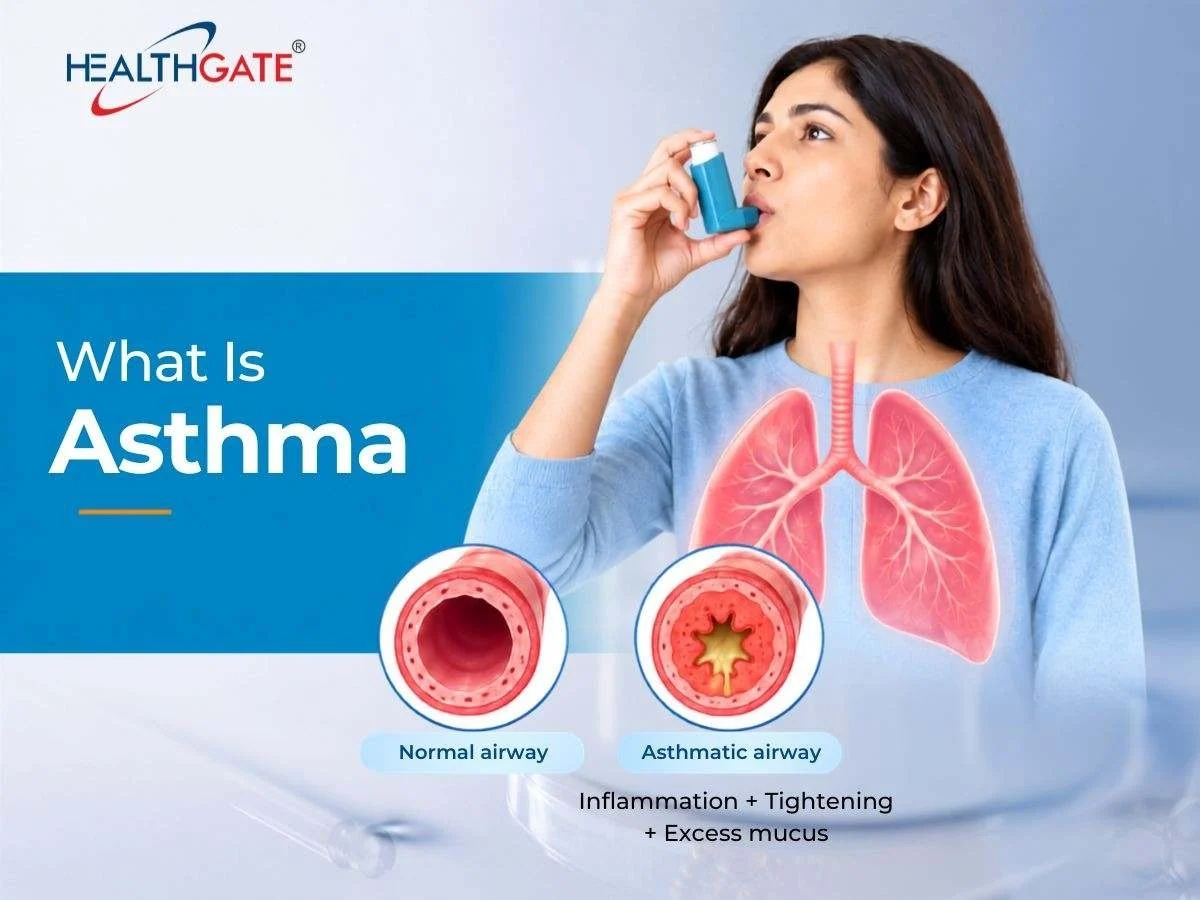
Asthma is a chronic disease of the respiratory system — tubes (airways) that carry air in and out of the lungs.
According to the Global Initiative for Asthma (GINA), Asthma is a heterogeneous disease most often chronic airway inflammation. It’s diagnosed by history of variable respiratory symptoms and expiratory airflow.
In simple terms, the airways of a person with asthma can become more sensitive and may narrow at certain times. This can make it harder for air to move through the lungs.
Asthma symptoms can:
Not everyone with asthma experiences symptoms in exactly the same way.
To understand asthma you have to know what goes on inside the lungs.
Normally air moves through the airways into the lungs. In people with asthma some changes can restrict airflow:
The four symptoms most commonly associated with asthma are:
Symptoms can vary person to person — mild one minute more obvious the next
Wheezing. Wheezing is whistling or musical sound when breathing may occur. It’s usually associated with narrowed airways.
Shortness of breath. A person may feel as if he or she can’t get enough air into lungs or breathing is harder than usual.
Chest tightness. Some people describe asthma as feeling pressure, tightness or constriction in the chest.
Cough. Asthma can make you cough (at night or under certain conditions).
These symptoms aren’t just for asthma — other respiratory conditions can cause similar symptoms so if you have persistent or recurrent breathing problems go and see a healthcare professional
No. Variability is one of the important features of asthma.
Someone may have few or no symptoms one time and more significant symptoms the next. Symptoms can change in frequency and intensity over time.
For some people symptoms become more obvious:
That’s why asthma can be hard to diagnose sometimes.
An asthma attack (also called an asthma flare-up or exacerbation) is when asthma symptoms and lung function are much worse than usual compared to what someone normally likes.
Symptoms (coughing, wheezing chest tightness or shortness of breath) during a flare-up can get much worse.Flare-ups of asthma are mild to severe. Severe exacerbations may need emergency treatment.
So if you have asthma then knowing what it is, following treatment and action plan from your healthcare professional will help manage it in future.
Yes. Asthma is a chronic disease long term of the respiratory system.
But chronic doesn’t mean someone has symptoms all the time. Asthma symptoms change over time and treatment (if it works) controls disease .
This distinction is important:
Chronic does not necessarily mean continuously symptomatic.
Someone with asthma may have periods when symptoms are well controlled and other periods when symptoms become more noticeable.
Asthma can affect people of all ages (children and adults). It’s important in childhood because WHO says asthma is the most common chronic disease in children. Someone’s risk for developing asthma may be influenced by many things —
If someone in your family has asthma you have a higher chance of getting it too.
But asthma doesn’t have one cause that applies to everyone.
No. Asthma is said to be a heterogeneous disease i.e. it can vary in characteristics and patterns between people.
People may differ in:
Asthma isn’t diagnosed because someone coughs or has occasional breathing problems.
GINA describes two important features used when diagnosing asthma:
Healthcare professionals may use lung function testing (spirometry and bronchodilator responsiveness testing) to help establish diagnosis but other tests may be used depending on individual situation.
Coughing, wheezing and shortness of breath can occur with other conditions so if asthma is suspected then professional evaluation should be sought.
Asthma is still a chronic disease that cannot be cured but can often be controlled by treatment and management.Treatment controls symptoms, reduces risk of exacerbations and helps people do normal activities.
Inhaled medicines are part of asthma treatment because they get the medication into lungs directly. Treatment is based on a person’s symptoms, clinical characteristics and medical assessment.
People with asthma need to follow treatment plans from healthcare professionals and not change or stop medication without doctor’s advice.
Understanding asthma can help people recognize recurring respiratory symptoms and seek appropriate medical evaluation.
When asthma is not adequately managed, symptoms can interfere with:
WHO notes that under-diagnosis and under-treatment remain challenges, and severe asthma symptoms can sometimes require emergency healthcare.Early recognition, appropriate diagnosis, access to suitable treatment and regular medical follow-up are important components of effective asthma management.
Asthma is part of the bigger picture of respiratory healthcare. As a respiratory pharmaceutical company in India, HealthGate knows how important it is for awareness and understanding to continue on respiratory conditions.
Respiratory healthcare is not only medicines. It’s disease awareness; diagnosis; treatment, monitoring, education of patients and responsible use of health resources.
For healthcare professionals and pharmaceutical business partners asthma (for example) can be background noise when talking about respiratory healthcare and pharma products.
Explore Healthgate’s respiratory pharmaceutical product portfolio →
Asthma is a chronic respiratory disease that comes with varying symptoms and variable restriction of airflow. Even though there are different aspects of the disease that might vary from one individual to another, diagnosis of the disease will allow for understanding of how the disease impacts the airways.
In case you have recurrent respiratory symptoms, a healthcare professional will be able to decide if asthma or some other health problem could be the cause.
Healthgate continues to focus on respiratory healthcare and pharmaceutical products with the goal of supporting better respiratory care and building a trusted respiratory pharmaceutical brand in India.
Asthma is a chronic respiratory disease (airway inflammation) usually associated with variable respiratory symptoms (wheezing shortness of breath chest tightness coughing)
Yes. Asthma is a chronic lung disease of the airways in the lungs.
The most common symptoms are wheezing, shortness of breath, chest tightness and cough.
Yes. Asthma symptoms can vary over time in both frequency and intensity.
Yes. Asthma is a chronic, long-term respiratory disease, although symptoms may not be present continuously.
Yes. Asthma can affect both children and adults and may begin at different stages of life.
There is currently no cure for asthma, but appropriate treatment can help control symptoms and reduce the risk of exacerbations.
No. Asthma itself is not a contagious disease.
Recurring wheezing, coughing, shortness of breath or chest tightness should be discussed with a healthcare professional, particularly when symptoms interfere with normal activities or repeatedly occur.
Partner with HealthGate for trusted respiratory healthcare solutions.

Healthgate is a leading respiratory pharma company in India, focused on delivering high-quality medicines for asthma, COPD, bronchitis, and other breathing disorders.
© 2026 Healthgate. All Right Reserved.