- Blog Details
What Is Intermittent Positive Pressure Breathing and How Does It Help?
Not everyone can breathe deeply on their own. Muscle weakness, pain after surgery, thick secretions or severe fatigue can make the lungs under-inflated and the airways blocked. When this happens clinicians sometimes use intermittent positive pressure breathing (a short-term respiratory therapy that uses a machine to help the patient inhale more deeply). This guide explains what it is, how it works when it’s useful and when it should be avoided.
What Is Intermittent Positive Pressure Breathing?
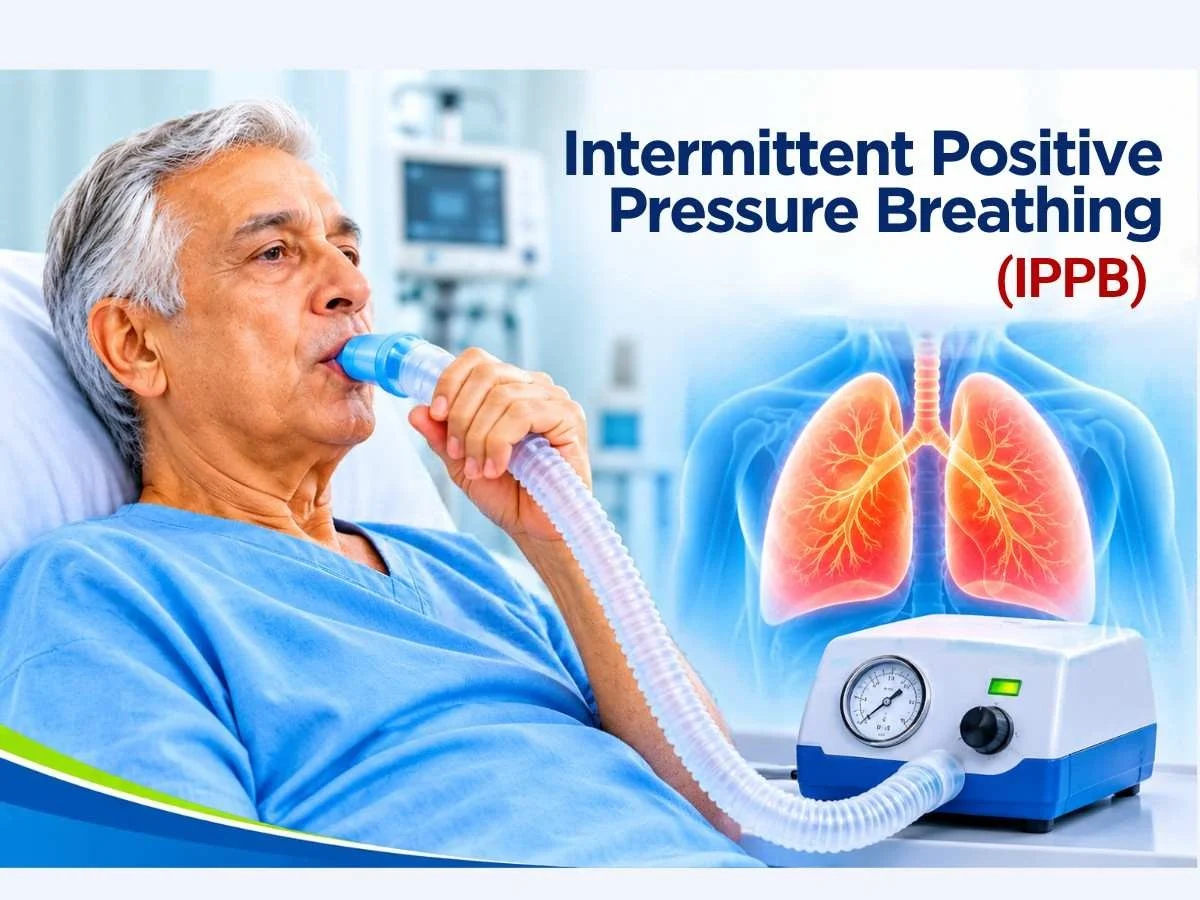
Intermittent positive pressure breathing (IPPB) is a treatment where the device blows pressurised air or an oxygen-air mixture into the lungs during inhalation. The pressure is applied only in short bursts (hence the term intermittent), exhalation is passive and unassisted.
IPPB is not the same as long-term ventilator support. It’s a short supervised session (10–20 minutes usually) and the patient starts each breath himself. It’s also different from CPAP or BiPAP which keep pressure on all the time (hours or overnight).
How the Treatment Works
An IPPB unit consists of a pressure-regulating machine, breathing circuit and mouthpiece or face mask (usually seated upright). Steps are as follows:
- The patient seals their lips around the mouthpiece or wears a mask if they cannot hold a seal.
- A gentle inhalation effort triggers the machine.
- The device pumps air in at a set pressure so that the lungs expand beyond what the patient can do unaided.
- When the target pressure or volume is reached, the flow stops and patient exhales normally.
Typical pressures are low to moderate and the therapist adjusts them depending on what the patient can tolerate and how much chest is expanded. Because the patient triggers every breath they have to be awake and cooperative.
Why Intermittent Positive Pressure Breathing Is Used ?
The therapy has three main aims.
1. Lung expansion.
Deeper inflation opens collapsed air sacs (atelectasis) so gas exchange is improved. This is most relevant after chest or abdominal surgery when pain restricts breathing.
2. Secretion clearance.
The larger volume inhaled can loosen mucus and make coughing more effective (especially when combined with chest physiotherapy).
3. Medication delivery.
A bronchodilator or other nebulised drug can be added to the circuit so that it reaches deeper into the lungs (helps patients who cannot generate enough inspiratory effort for a standard inhaler or nebuliser).
Who May Benefit
Therapy is considered for patients who cannot do standard lung-expansion techniques (incentive spirometry or deep breathing exercises). Examples include:
- Muscular dystrophy or spinal cord injury patients whose breathing muscles are weak.
- Post-operative patients who cannot take deep breaths because of pain or sedation.
- Patients with retained secretions who can’t cough effectively.
- Selected patients for aerosol therapy who can’t use other delivery devices.
It is important to be honest about the evidence. Intermittent positive pressure breathing has not been shown to be better than simpler methods (incentive spirometry) in routine use in COPD or post-operative lung complications so current practice reserves it only for patients who really can’t do those simpler things and is prescribed as a targeted option not default one.
Risks and Contraindications
Like any intervention IPPB has risks and patient selection matters too.
Possible side effects include over-breathing which causes dizziness or lightheadedness; air swallowing that makes stomach bloated; dry mouth and airway resistance (in some patients). High pressures can cause lung injury (barotrauma) in rare cases.
It should be avoided or used with great caution in patients with untreated pneumothorax (air outside the lung), significant coughing up of blood, unstable heart/circulation, raised pressure inside skull, oesophageal or facial surgery within the last 6 weeks or active nausea and vomiting. Patients with bullous lung disease also need careful assessment.
Because of these concerns IPPB should only be started on a doctor’s order and by trained staff (such as respiratory therapists or nurses). Heart rate, breathing pattern, oxygen saturation and chest movement during the session are monitored to catch problems early.
Medicines Side by Side With Therapy
A machine won’t fix a respiratory problem on its own. IPPB often works best as part of a wider plan including bronchodilators to relax the airways, mucolytics to thin secretions, anti-inflammatory drugs to calm the lining of the airway and antibiotics if infection is present. The quality and consistency of these formulations determine how well patients recover so reliable respiratory medicines are still at the core of care.
An Opportunity for Doctors and Pharma People
Respiratory problems are among the most common reasons people seek medical care in India — demand is year-round. For doctors looking to expand their practice, distributors looking to add respiratory products to their portfolio and pharma employees ready to go independent, a respiratory PCD franchise is a practical way to get into this segment: you have a ready range of respiratory products so you can build relationships with clinicians and grow your own business.
Take the Next Step With Healthgate
Healthgate Private Limited is a respiratory pharma company that helps people breathe easier all over India. If you’re a doctor, distributor or pharma professional looking to build a business in respiratory care contact Healthgate today. We will explain our product range, franchise terms and support so you can get started with confidence.