- Blog Details
How Does the Human Respiratory System Work?
Every minute an adult resting at home breathes in and out about 12 to 20 times — usually without a single thought going through your head. Behind this automatic act is a network of organs and muscles precisely coordinated together. Knowing how the human respiratory system works allows doctors to explain conditions to patients clearly; distributors and pharma people understand why respiratory care remains one of the most consistent therapy areas in India.
What Is the Human Respiratory System?
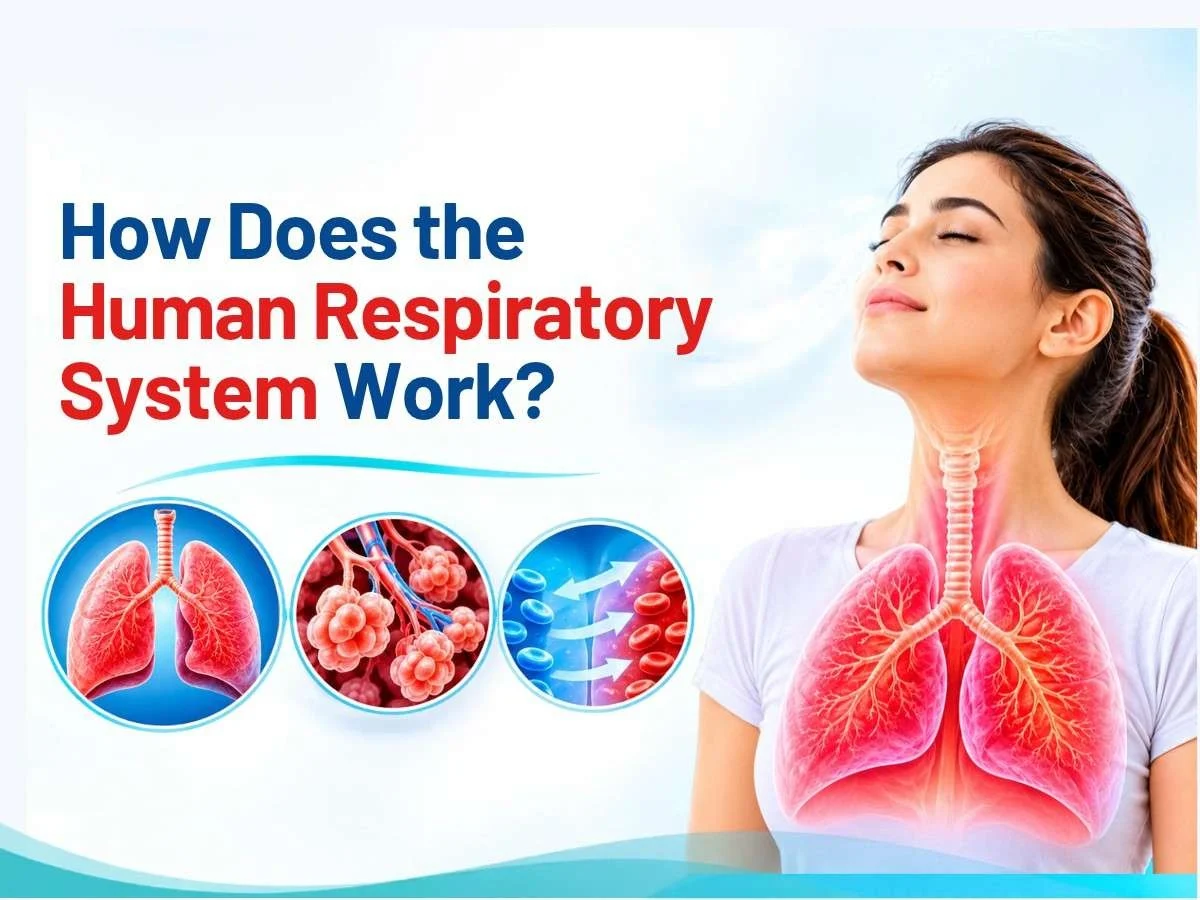
The respiratory system is the group of organs that bring oxygen into the body and remove carbon dioxide. Cells need oxygen to make energy; they release carbon dioxide as waste. The respiratory system does this all the time working in partnership with the heart and blood vessels.
It has two main parts. The upper respiratory tract consists of the nose, nasal cavity, pharynx and larynx; lower respiratory tract consists of trachea, bronchi, bronchioles and lungs.
The Journey of a Single Breath
- Air first goes through the nose where small hairs and mucus trap dust, pollen and microbes; nasal passages warm and humidify air so it doesn’t irritate the delicate tissues deeper in the lungs.
- Air passes from the nose through the pharynx (throat) and larynx (voice box). A small flap called epiglottis closes over the windpipe when swallowing so food does not enter the airway.
- The air then goes into the trachea which is a tube reinforced with rings of cartilage that keep it open. The trachea splits into two bronchi (one for each lung). Inside the lungs the bronchi branch repeatedly into smaller bronchioles (like branches of an inverted tree). Lining these airways are tiny hair like structures called cilia which sweep mucus and trapped particles upward continually so they can be coughed out or swallowed.
Where Gas Exchange Actually Happens
The bronchioles end in clusters of tiny air sacs called alveoli. An adult lung has hundreds of millions of them and together they cover a surface area about the size of a tennis court. Each alveolus is wrapped in a mesh of fine capillaries.
Here is where the respiratory system does its most important work. Oxygen in inhaled air is higher than in blood arriving at alveoli so diffuses across the thin wall of alveoli into capillaries. Haemoglobin in red blood cells binds it and carries it to tissues all over the body; carbon dioxide goes the other way, from blood into alveoli to be breathed out.
The Mechanics of Breathing
The lungs have no muscle of their own so they need surrounding structures to move air through them. The diaphragm is the key player — dome shaped muscle under the lungs.
- Inhalation: The diaphragm contracts and flattens; intercostal muscles between ribs lift the rib cage outward. Chest cavity expands, pressure inside lungs drops below atmospheric pressure and air rushes in.
- Exhalation: Diaphragm relaxes and moves upward, rib cage returns to resting position, elastic lungs recoil; pressure inside increases and air flows out.
At rest exhalation is passive. When exercising or ill abdominal and neck muscles join in to move air more forcefully.
How the Body Controls Breathing
Breathing is controlled by the brainstem — medulla oblongata and pons — chemoreceptors sense the level of carbon dioxide in blood (acidity). If carbon dioxide rises during exercise (as it does), the brain signals the diaphragm and rib muscles to work faster and deeper (this is why you breathe harder after climbing stairs).
You can briefly override this control by holding your breath or breathing deliberately but soon the brain takes over again. This built-in feedback loop keeps oxygen and carbon dioxide levels within a narrow safe range.
What Happens When the Respiratory System Is Disrupted?
Because the respiratory system comes into contact with outside air all day long, pollutants, allergens and infections are present every day. In India urban air pollution, dust, smoking, seasonal changes and crowded living conditions make respiratory complaints very common.
When airways become inflamed or narrowed (asthma) or alveoli are damaged, gas exchange is impaired. Common conditions include:
- Asthma: Airways get inflamed and constrict (wheeze and breathlessness).
- COPD: long term airflow limitation (smoking or prolonged exposure to smoke and dust).
- Bronchitis and pneumonia: Infections that fill airways or alveoli with mucus and fluid.
- Allergic rhinitis and sinusitis: Inflammation of the upper tract (nose, sinuses etc) caused by allergens.
Inhaled medicines (inhalers), respules (nasal sprays) , nebulisation solutions (spray into the lungs), nasal sprays, anti-allergics and anti-congestion products are often used. These deliver medicine directly to the airways or reduce inflammation and mucus so that easier airflow is restored.
Why This Matters for Healthcare Professionals and Pharma Entrepreneurs
If you understand the respiratory system then you know why some medicines work in certain ways. A bronchodilator relaxes the muscles around bronchioles; a mucolytic thins secretions so cilia can clear them; an inhaled corticosteroid reduces inflammation at airway lining. Doctors who understand this can counsel patients better; pharma professionals who understand this can promote products with confidence and credibility.
Respiratory illness is also a steady need year-round (not just a short term trend) and demand increases during winter, monsoon and high pollution months. This is attractive to doctors, distributors and pharma employees who want to build a business of their own. A respiratory PCD franchise gives you an established product portfolio without having to run manufacturing yourself.
Looking After Your Respiratory Health
A few habits support the respiratory system in the long term:
- don’t smoke or second hand smoke;
- wear a mask when dusty or polluted;
- keep vaccinations (flu and pneumococcal) up to date;
- stay physically active so breathing muscles are strengthened.
Anyone with a persistent cough, wheeze, chest tightness or breathlessness should see a doctor early rather than wait for symptoms to get worse.
Partner With Healthgate
Healthgate Private Limited is a respiratory pharma company that aims to make breathing easier in India. If you are a doctor, distributor or pharma professional who wants to start your own business in this area we would be happy to help you.
Contact Healthgate today to know about our respiratory range, franchise terms and support we offer — the first step towards building a business that really makes a difference to patients’ lives!