

Asthma symptoms can vary from one person to another. Some people may only have symptoms occasionally and others more frequently. Some symptoms are more apparent when working out or in a particular area like allergens and/or respiratory infections or at night.
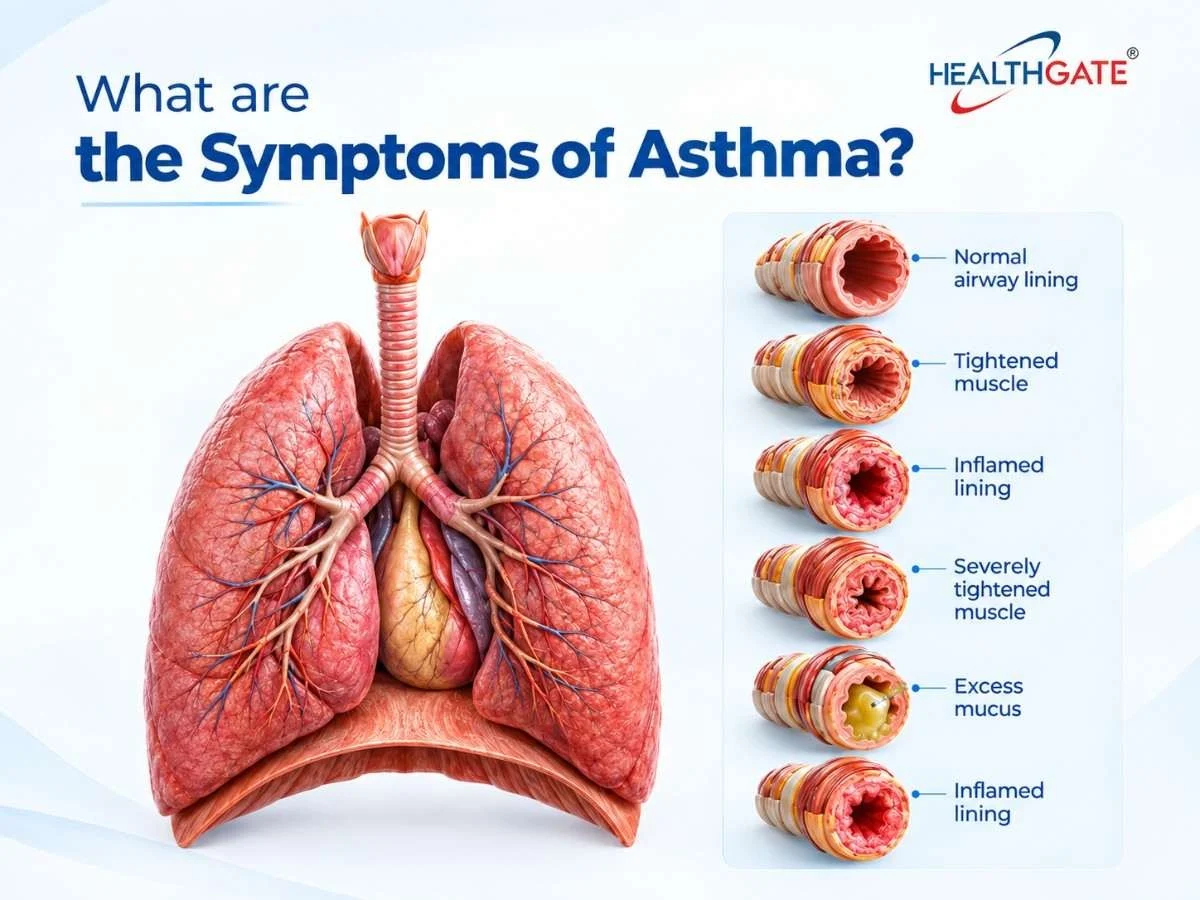
Shortness of breath is one of the most commonly recognised symptoms of asthma. A patient with asthma is often seen to feel that he or she has not been able to get enough air into his lungs or even breathing seems very difficult. It would seem like he or she is breathing more laboriously. Physical activity might also cause it, and so do rest.
Wheezing is a high-pitched whistling or squeaking sound that we often hear when we breathe. It is typically more pronounced when we breathe out, but can be heard in inhalation and exhalation.
For some people it is mild and not detectable when we breathe out but for others it is loud enough to be heard. Wheezing may come and go and not always occur.
Asthma can also result in a cough that repeats or in some respect becomes worse. People tend to cough more at night or early in the morning.
Coughing can be the most obvious, and only symptom in some cases. However, the cough can also be more noticeable after exercise, exposure to cold air, or contact with something that causes someone’s symptoms.
Asthma sufferers can describe tightness, pressure, heaviness, or squeezing in the chest.
So it can feel like something is pressing on the chest and it is hard to breathe and feel unaccustomed to just resting. The feeling can accompany coughing or wheezing or shortness of breath (not always the same) and can vary in strength.
Breathing symptoms might be worse for people who are exercising or at the gym or doing things that they don’t normally do.
They might be unusually short of breath, start coughing, wheezing and feel tight in the chest. Those symptoms can make physical activity more difficult than anticipated and take a bit of time to settle down after.
A person might wake up because of coughing, wheezing, chest tightness or difficulty breathing. Repeated nighttime symptoms can interfere with sleep and may leave patients tired the next day.
One very specific feature of asthma signs and symptoms is that they don’t stay the same.
A person might be perfectly normal at one point and suddenly cough, wheeze, experience chest tightness and have breathing problems. The intensity can also vary over time.
For some people it is mild and may be very mild and sometimes it will be common and it is more common or even more severe if it is worse or more frequent or there are some periods of it.
Asthma does not need to have a single symptom. You might have more than one symptom (coughing can be accompanied by wheezing and shortness of breath, chest tightness and difficulty breathing, for example).
And the pattern can be different, too. Some people tend to be coughing the most, others have more frequent wheezing.
Asthma symptoms can vary from person to person, but recurrent wheezing, coughing, shortness of breath and chest tightness are common symptoms of the disease.
If breathing symptoms are severe, rapidly worsening, or difficult to talk or breathe normally, urgent medical attention is needed.
Healthgate’s respiratory care products are developed to promote better respiratory health and assist with symptoms of breathing problems (coughing, wheezing, chest tightness, and shortness of breath). For the specific product and formulation, it could facilitate easier breathing and overall lung comfort.
Physicians should refer patients to a healthcare professional for appropriate use, dosage, and suitability as per product information.
Partner with HealthGate for trusted respiratory healthcare solutions.

Healthgate is a leading respiratory pharma company in India, focused on delivering high-quality medicines for asthma, COPD, bronchitis, and other breathing disorders.

© 2026 Healthgate. All Right Reserved.